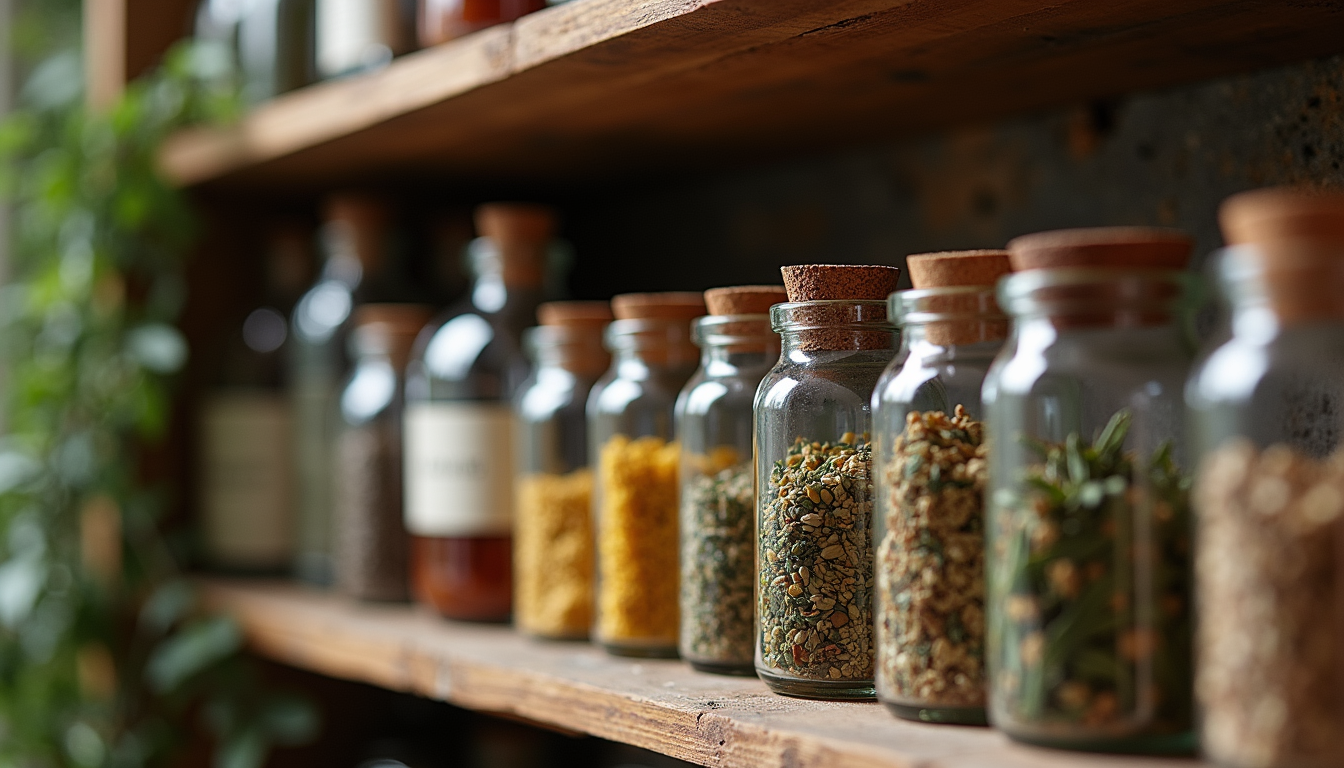
From the Naturalis Herbal journal archive. Updated for this site in November 2026. Current ingredients, prices, stock, and ordering options are listed in the Naturalis Herbal shop.
Chamomile, elderberry, mullein, calendula, and ashwagandha appear often in herbal conversations. Getting to know their names and uses can be interesting, but an herb’s reputation does not make it right for everyone.
Chamomile
Many people enjoy chamomile in tea or as a familiar scent. Check for allergies and do not assume that a pillow spray has the same effects as a preparation studied by mouth.
Elderberry
Elderberry is often marketed during cold season. It should not be presented as a reliable way to prevent or treat flu or as a replacement for appropriate medical care.
Mullein
Mullein has traditional respiratory uses. A tincture is not a substitute for prescribed breathing treatment or an assessment of a persistent cough.
Calendula
Calendula appears in skin products and infused oils. Check the full formulation and use it only as directed; a botanical label does not make a product suitable for every rash or wound.
Ashwagandha
Some preparations have been studied for stress and sleep. Effects and risks depend on the preparation and person. It should be avoided during pregnancy and breastfeeding, and medicine interactions need checking.
You do not need all five herbs in a medicine cabinet. Start with a question, read the label, and ask a qualified clinician or pharmacist about your individual situation.
Read more: NCCIH on ashwagandha.
This journal is for general education and personal reflection. Traditional uses and individual experiences are not proof of effectiveness. Products are not substitutes for medical diagnosis or treatment. Ask a qualified healthcare professional about individual suitability and medicine interactions.